Poly1Rover
Passive ratcheting antenna deployment mechanism for a student-developed planetary rover.
Overview
Designed a passive ratcheting antenna deployment mechanism for the latest generation of the Poly1Rover student-developed planetary rover while serving as Project Manager for the Poly1Rover organization, leading a multidisciplinary engineering team of over 40 students. The mechanism utilizes existing suspension motion to deploy and lock an antenna, reducing power consumption and mechanical complexity by eliminating a dedicated deployment motor. The project progressed through three design iterations, engineering analysis, and rapid prototyping, before being presented at the Cal Poly Engineering Expo.
Project Details
Lead Mechanical Design Engineer
Project Manager
Role
Timeline
January 2026 - June 2026
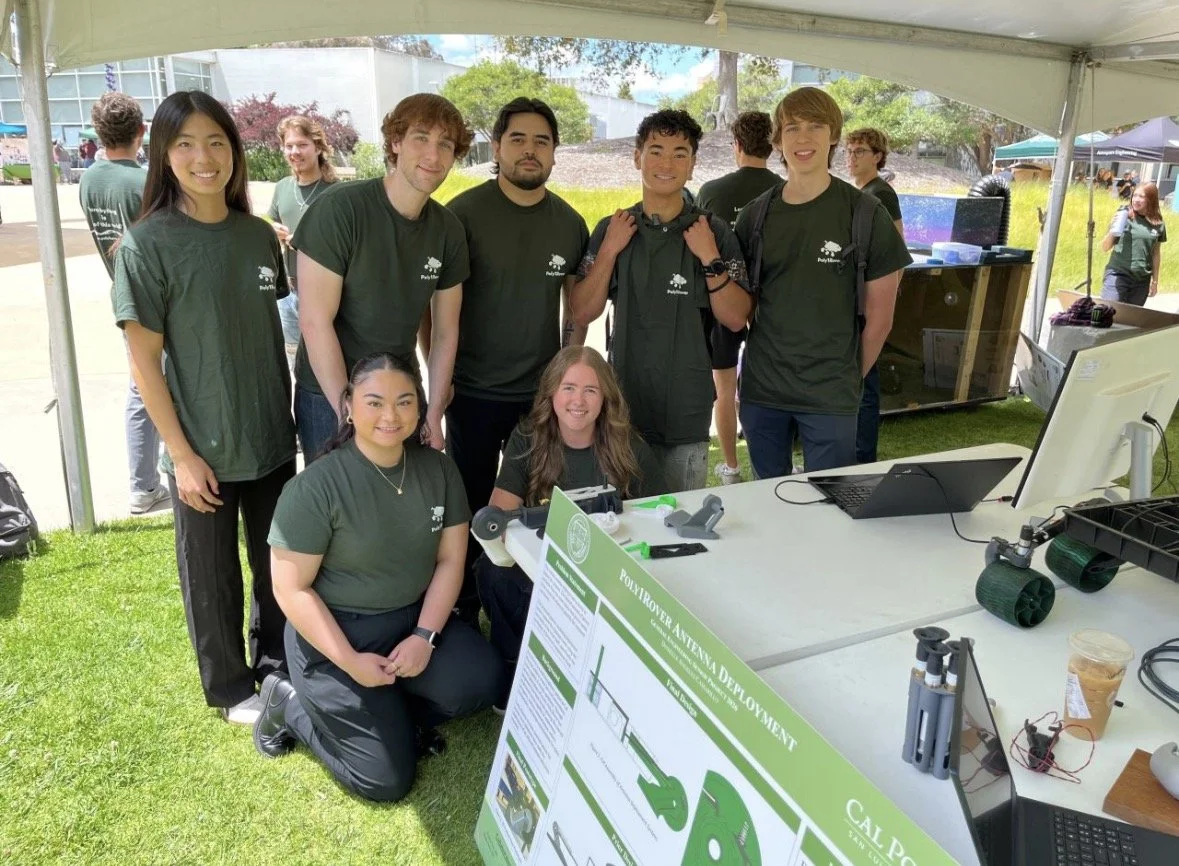
Mechanical Design Subteam: 5 students
Poly1Rover Club: 40+ students
Team
SolidWorks
MATLAB
Bambu Studio
TeamGantt
Software
Skills
Mechanical Design
CAD Modeling
Engineering Analysis
Rapid Prototyping (3D Printing)
Design Iteration
Project Management
Multidisciplinary Collaboration
Technical Communication
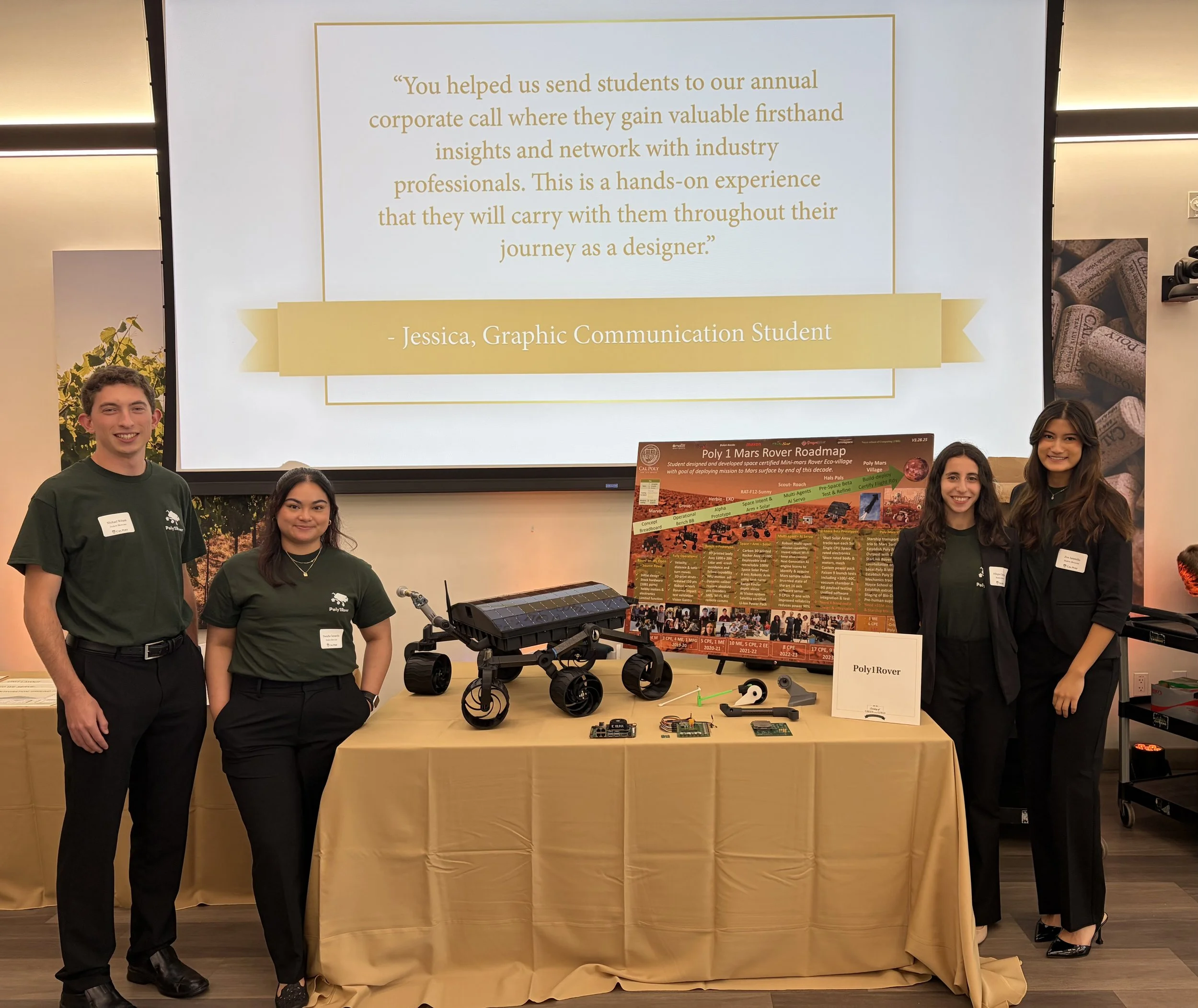
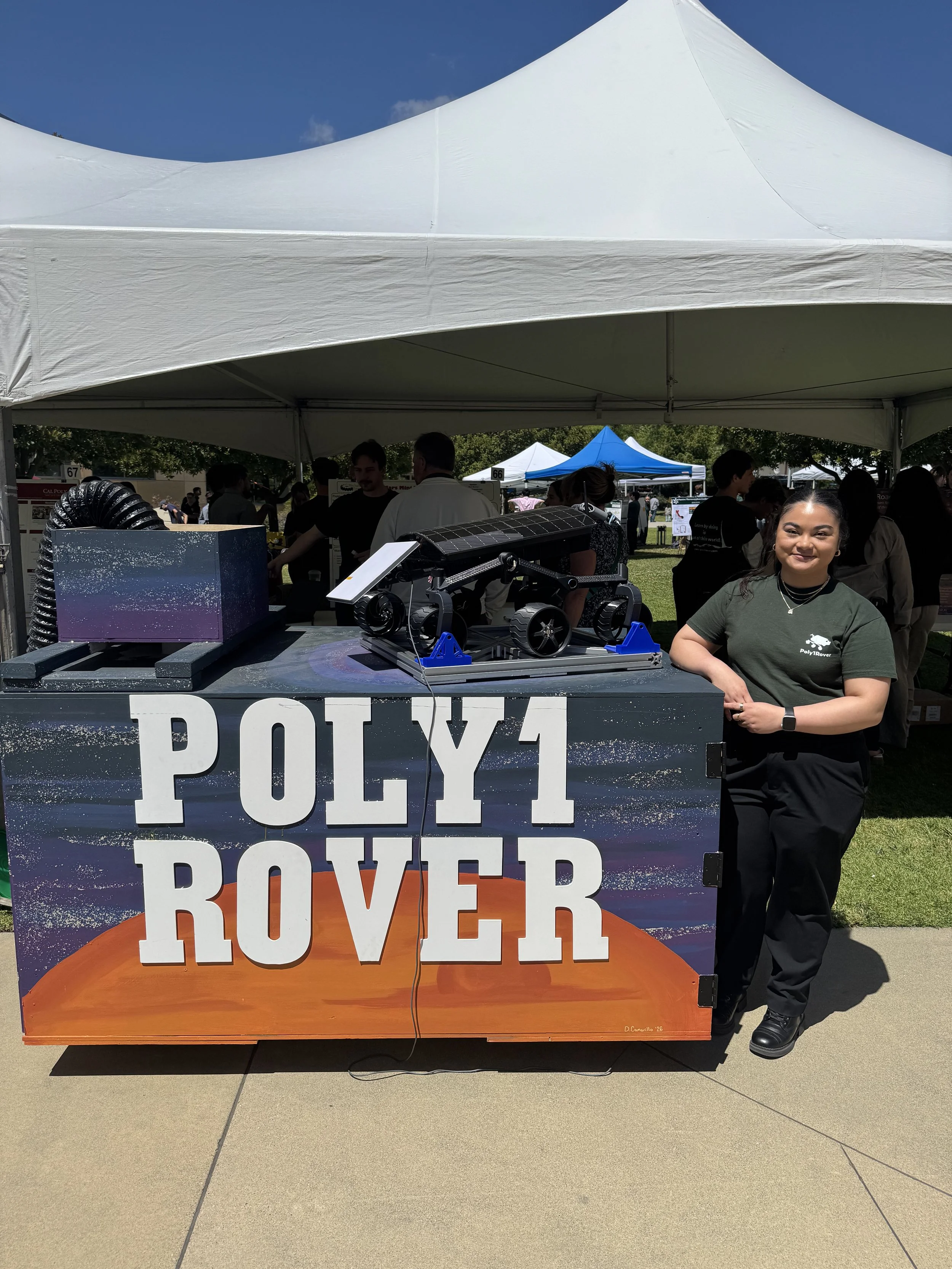
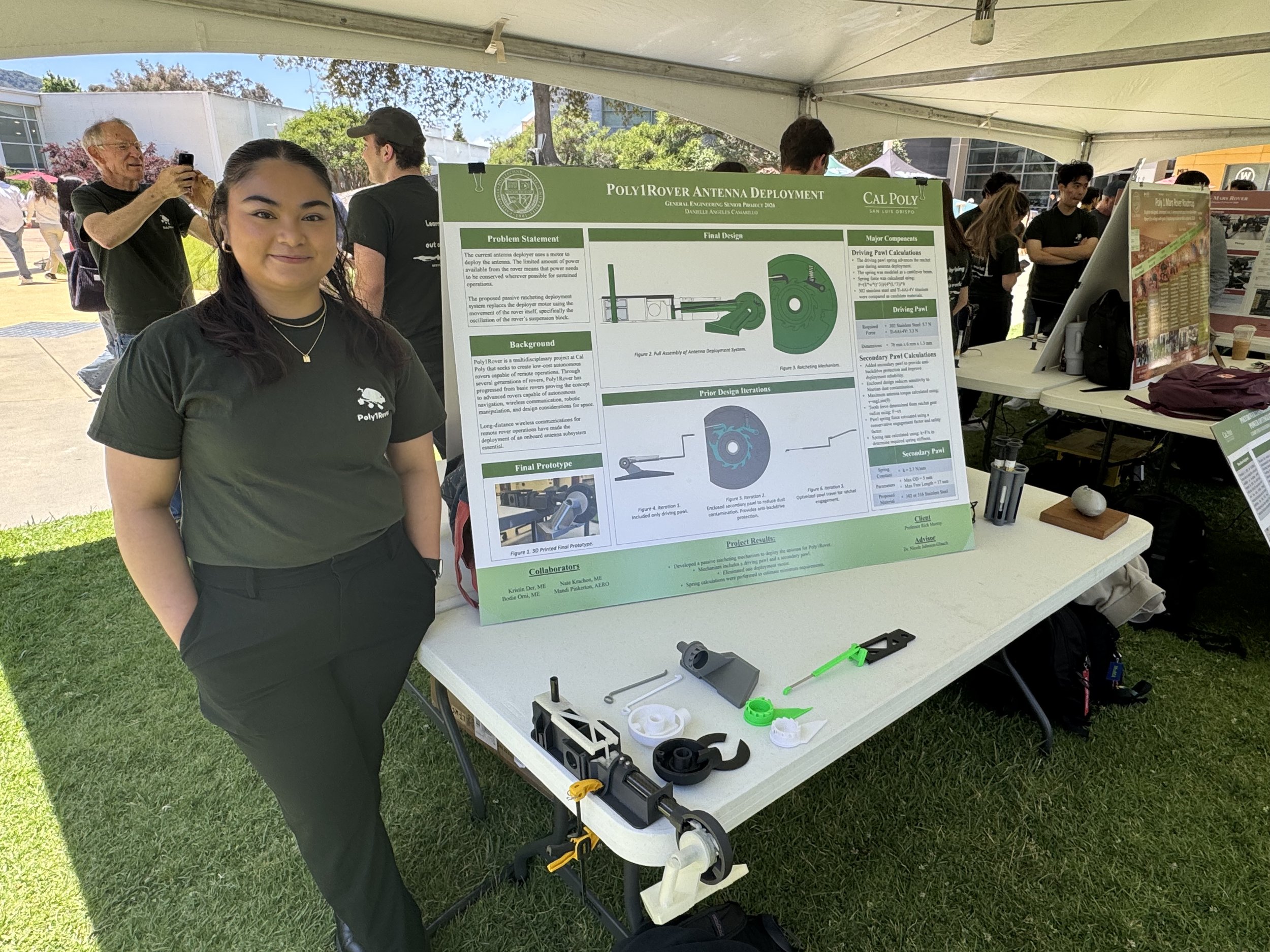
Presenting Poly1Rover at Cal Poly’s Evening of Green and Gold.
The rover’s antenna was originally deployed using a dedicated motor, increasing system power consumption and mechanical complexity. The challenge was to develop a passive mechanism that used existing suspension motion to deploy and lock the antenna while remaining compact, reliable, manufacturable, and compatible with the rover chassis.
The Challenge
Design Requirements
Eliminate the dedicated deployment motor
Use existing suspension motion
Lock the antenna in the deployed position
Fit within the rover chassis
Design Process
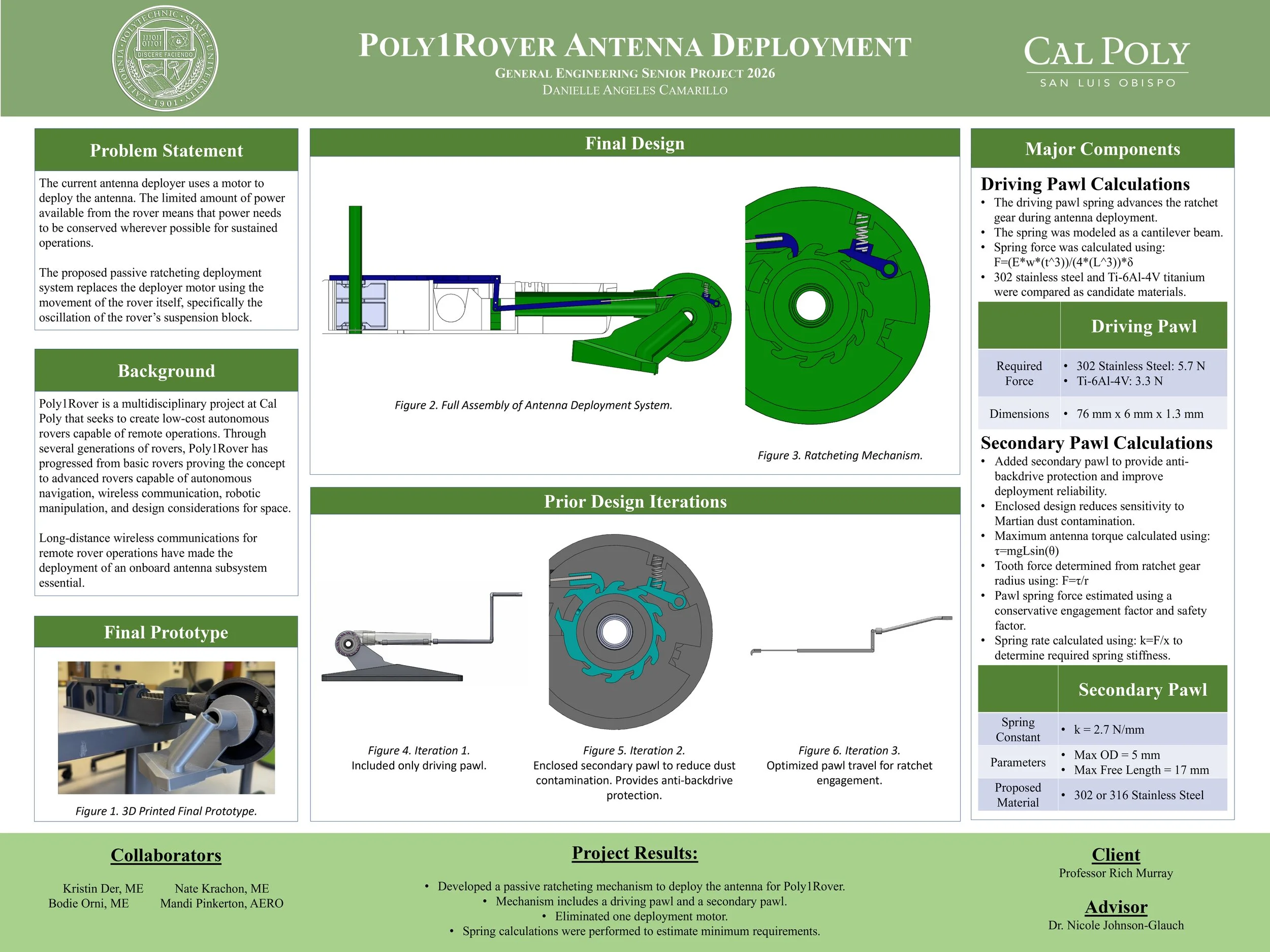
The antenna deployment mechanism evolved through three prototype iterations, with each design addressing the limitations identified during testing to improve reliability, manufacturability, and overall performance.
-
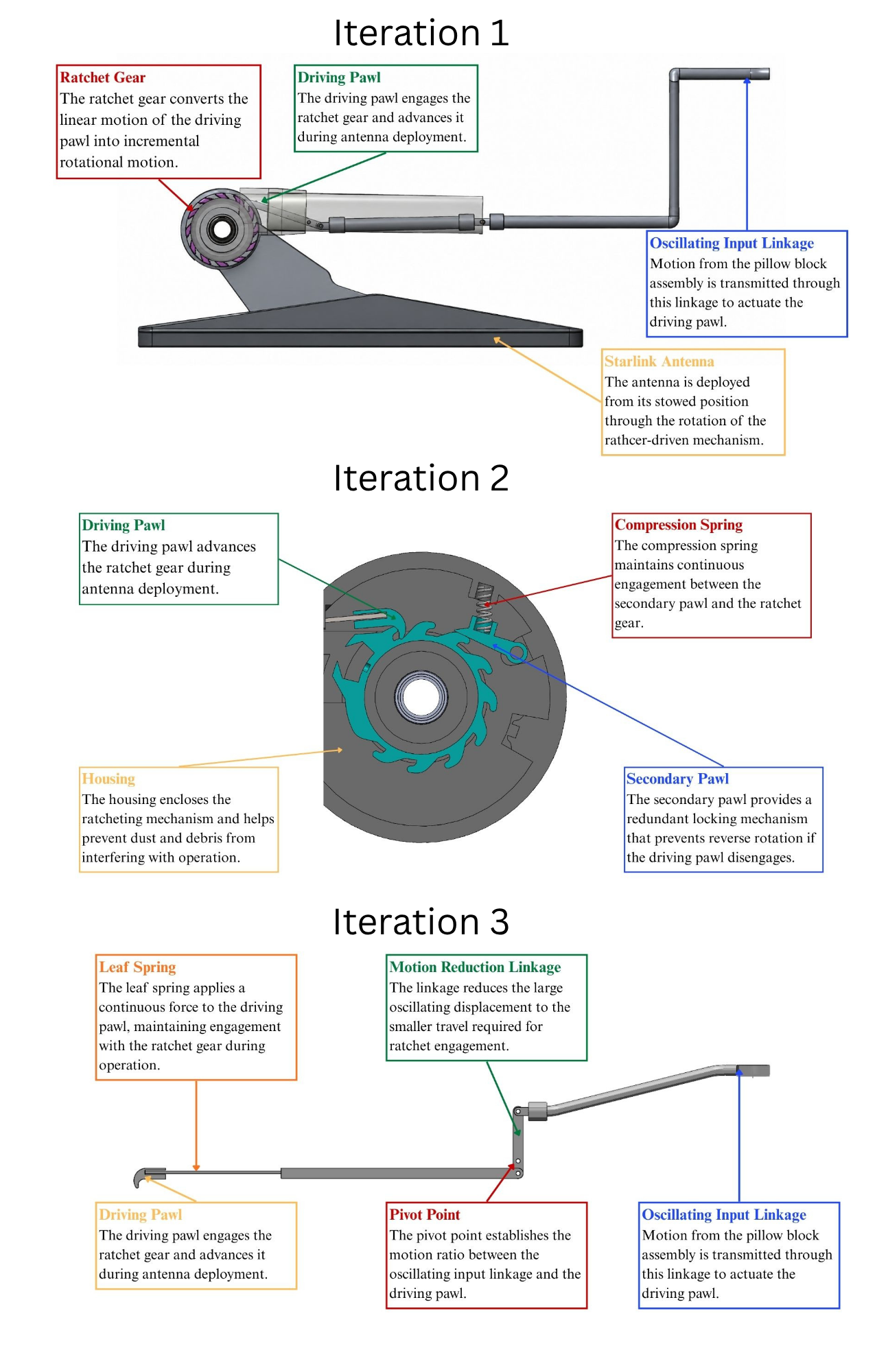
The first prototype was developed to evaluate whether a passive, single-pawl ratcheting mechanism could reliably deploy the antenna using the rover's suspension motion. The design prioritized simplicity by minimizing the number of moving components and was rapidly manufactured using FDM 3D printing in PLA for quick testing.
Testing revealed several critical design issues. The mechanism did not properly interface with the rover chassis, the pawl exhibited excessive travel, and the absence of both a secondary locking pawl and a preloaded engagement mechanism reduced deployment reliability. These findings established the key design requirements that guided the next iteration, including improved fitment, controlled pawl motion, redundant locking, and consistent ratchet engagement.
-
Iteration 2 focused on improving the reliability and durability of the deployment mechanism based on lessons learned from the initial prototype. A secondary locking pawl was added to provide redundancy, while a spring-loaded design maintained constant engagement with the ratchet gear for more consistent operation. The secondary pawl was enclosed within a protective housing to reduce the risk of dust and debris interfering with the mechanism, and a redesigned mounting interface corrected the fitment issues identified in the first prototype. Although these improvements increased reliability, testing revealed that the primary pawl still experienced excessive travel, resulting in inconsistent engagement. Additionally, the placement of the secondary pawl prevented the intended staggered locking sequence, indicating that the actuation method required a more fundamental redesign for the final iteration.
-
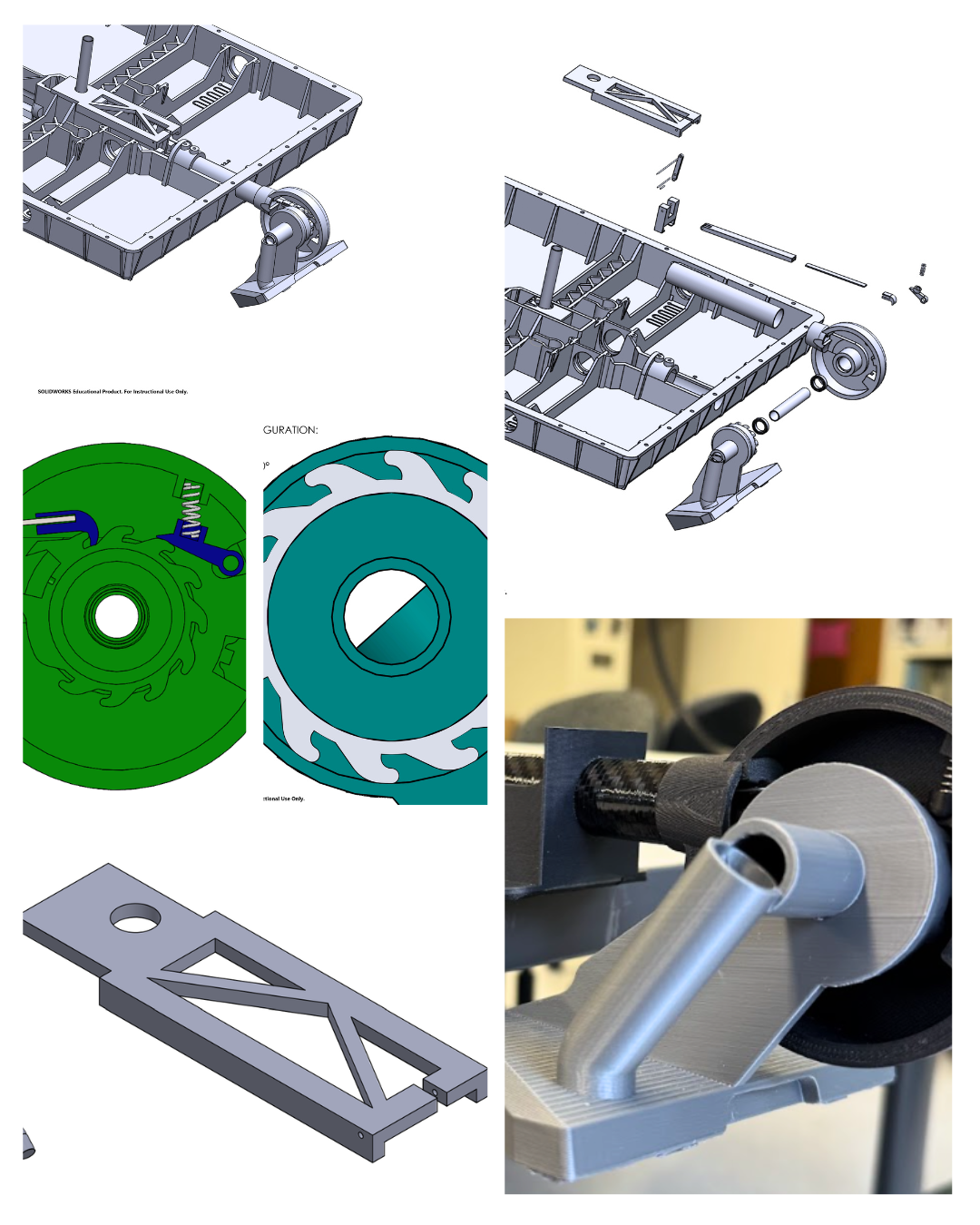
Iteration 3 addressed the remaining performance limitations by redesigning the actuation system to better match the rover's suspension motion with the ratchet mechanism. Engineering analysis showed that the suspension produced approximately 44 mm of travel, while the ratchet required only 10 mm for reliable engagement. A motion-reduction linkage was developed to achieve the required displacement ratio, while a leaf spring and alignment guide improved consistent pawl engagement. The secondary pawl was also repositioned to create the intended staggered locking sequence. Testing demonstrated significantly improved deployment performance and resolved the major issues identified in previous iterations, establishing the foundation for the final antenna deployment mechanism.
Engineering Analysis
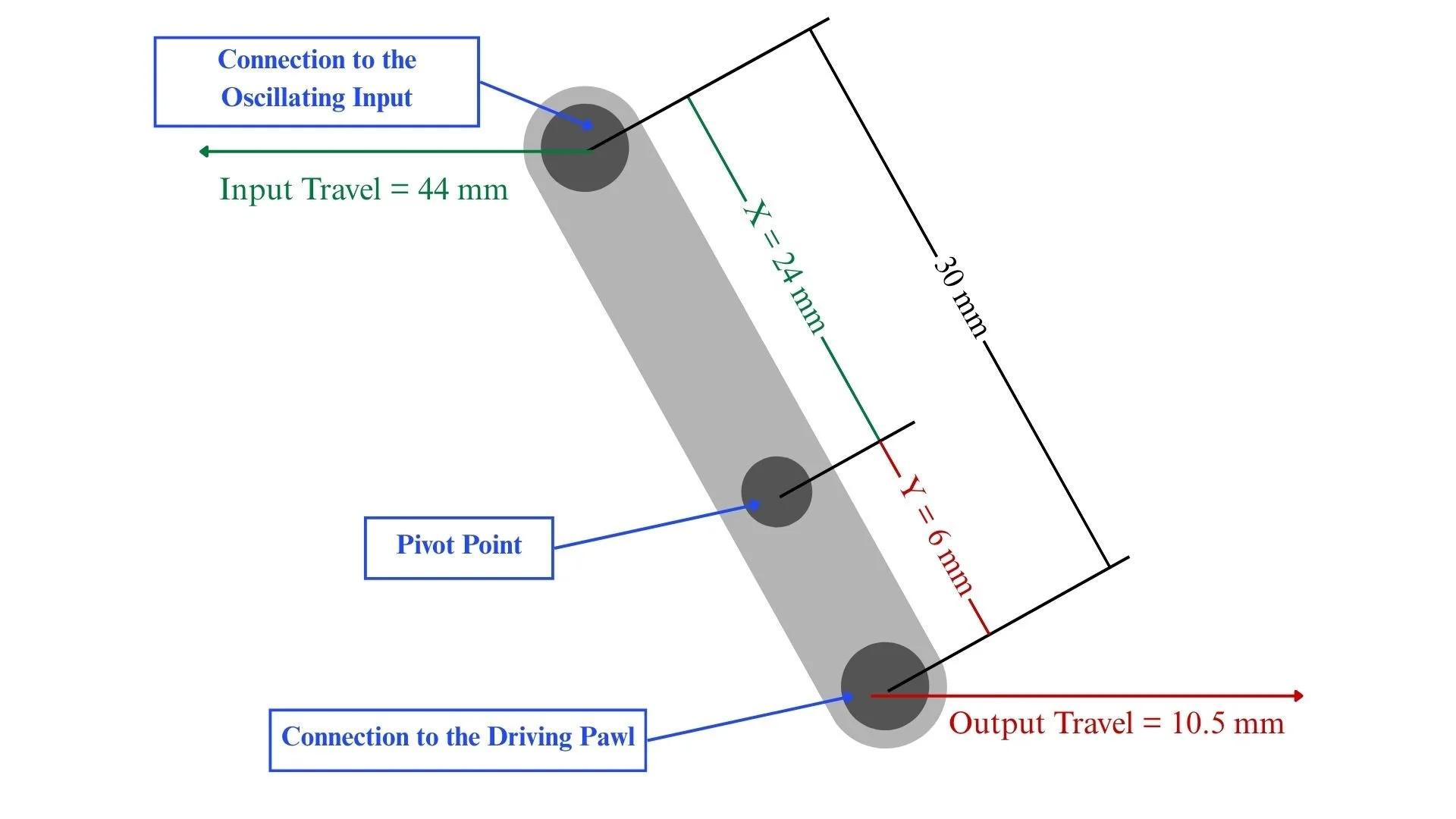
Linkage Motion Analysis
The rover's suspension provided approximately 44 mm of linear travel, while the ratchet mechanism required only 10.5 mm to advance one tooth. This mismatch caused excessive pawl motion and unreliable engagement during earlier prototypes. This analysis established the pivot geometry used in the final mechanism, enabling consistent ratchet engagement while minimizing unnecessary motion.

Driving Pawl Spring Analysis
A leaf spring was incorporated into the driving pawl to maintain continuous contact with the ratchet gear throughout deployment. Beam bending calculations and MATLAB analysis were used to evaluate candidate materials and spring geometries. While both titanium and stainless steel met the design requirements, 302 stainless steel was selected because it provided a greater engagement force, improving deployment reliability while maintaining acceptable actuation loads.
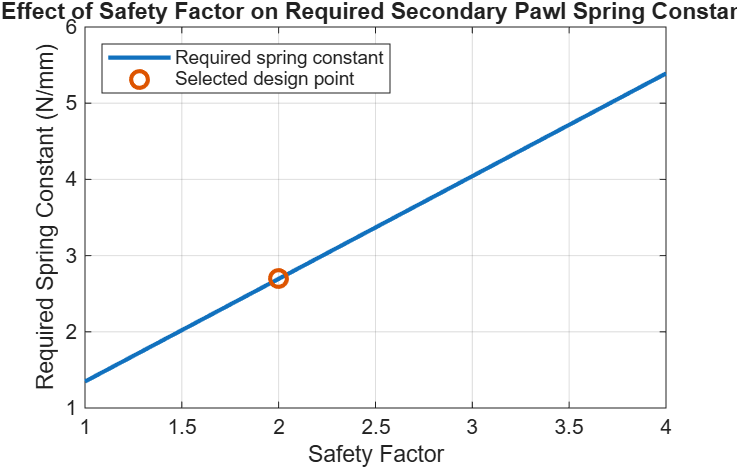
Secondary Pawl Spring Analysis
The secondary locking pawl was designed to prevent the antenna from rotating backward after deployment. The maximum loading condition was analyzed using the gravitational torque generated by the antenna assembly, allowing the required spring force and stiffness to be calculated. A safety factor of 2 was incorporated into the design to ensure reliable engagement while maintaining compatibility with commercially available compression springs.
Final Design
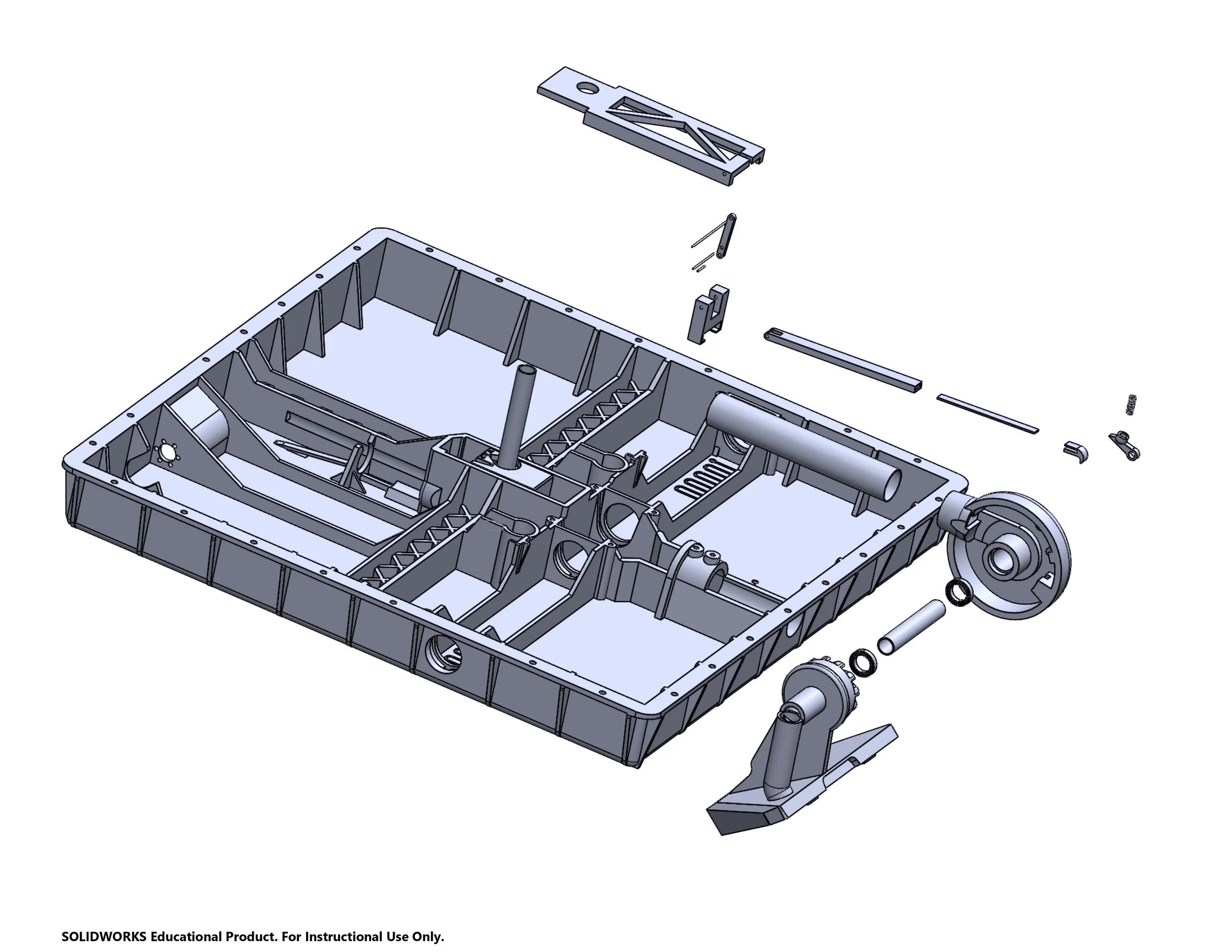
The final antenna deployment mechanism combined the improvements developed throughout the design process into a compact, passive system that deploys and locks the antenna using the rover's existing suspension motion. Following updates to the rover chassis, the original rod-style linkage was replaced with a guided sliding plate that simplified motion transfer while maintaining alignment during operation. The final design retained the motion-reduction linkage, ratchet mechanism, driving pawl, secondary locking pawl, and spring systems developed during the third design iteration, resulting in a reliable, low-power deployment mechanism that eliminated the need for a dedicated deployment motor.
Results
The final design successfully demonstrated a passive ratcheting mechanism capable of deploying and locking the antenna using existing suspension motion. Iterative prototyping and engineering analysis resolved the primary reliability issues identified during development, resulting in a simplified, low-power deployment system that eliminated the need for a dedicated actuator. The completed prototype was presented at the Cal Poly Engineering Expo as part of the Poly1Rover project.
✓ Eliminated the need for a dedicated antenna deployment motor
✓ Reduced mechanical complexity and power consumption
✓ Validated the motion-reduction linkage through prototype testing
✓ Presented the final design at the Cal Poly Engineering Expo
Project Outcomes
This project further highlighted the significance of iterative design and engineering analysis in creating dependable mechanical designs. Instead of working towards one design only, each design was tested and analyzed for its performance, and decisions were made based on performance and engineering analysis. Serving as both Project Manager and Lead Mechanical Design Engineer strengthened my ability to coordinate a multidisciplinary team while balancing technical development, project planning, and communication throughout the project.
Reflection
Senior Project Poster